The Beautiful Chaos of Indian Weddings
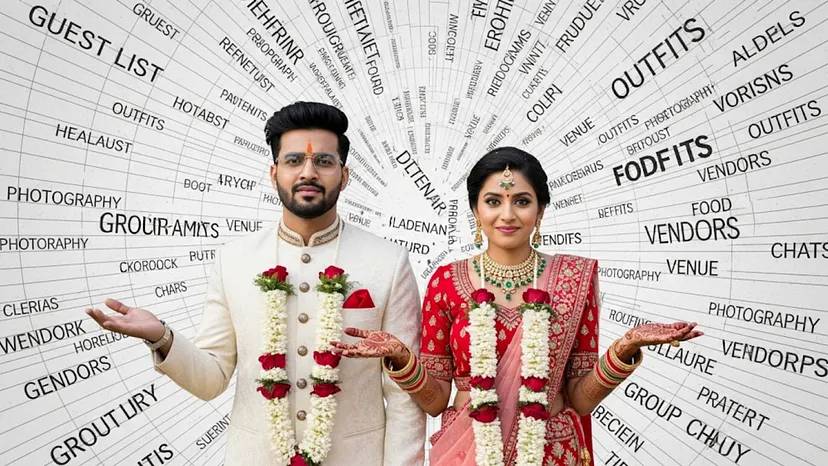
Disclaimer: No uncles were harmed in the making of this blog, though several may have pulled muscles while attempting viral dance moves.
Indian weddings aren’t events, they’re beautifully choreographed disasters. Imagine the logistical complexity of a space mission, the emotional chaos of a Bollywood drama, and the planning skills of a kindergarten class all rolled into one week-long spectacle. Add to that three generations debating music volumes, dance moves, and selfie angles, and you’ve got an anthropological study in family dynamics. While teens livestream every ritual, grandparents worry the camera flash might blind them and somewhere in between, you’re teaching Nani how to use the front-facing camera (again).
The Guest List: A Mathematical Impossibility
It starts innocently enough. “Beta, let’s keep it small, just family.” Six months later, you’re looking at a guest list that includes your father’s college roommate’s neighbor’s son, three people nobody can identify, and somehow the entire population of your hometown.
The guest list operates on mysterious physics. For every person you remove, two more magically appear. Aunties become skilled negotiators, deploying phrases like “but they invited us to their daughter’s engagement ring ceremony” with the precision of diplomatic warfare.
The Outfit Olympics
Shopping for Indian wedding outfits is an extreme sport that should be included in the Olympics. Families embark on missions to find the perfect ensemble that’s traditional enough for the elders, trendy enough for Instagram, and comfortable enough to survive fourteen hours of non-stop celebration.
The color coordination meeting resembles a UN summit. “We can’t wear red, that’s the bride’s color.” “Pink is too close to red.” “What about magenta?” “That’s basically red!” Eventually, everyone settles on colors that exist in a parallel universe where burgundy and maroon are considered completely different.
The blouse fittings deserve their own reality show. Three generations of women squished into a tiny tailor shop, debating necklines with the intensity of constitutional lawyers. The tailor, meanwhile, has perfected the art of nodding while internally screaming.
The Venue Juggling Extravaganza
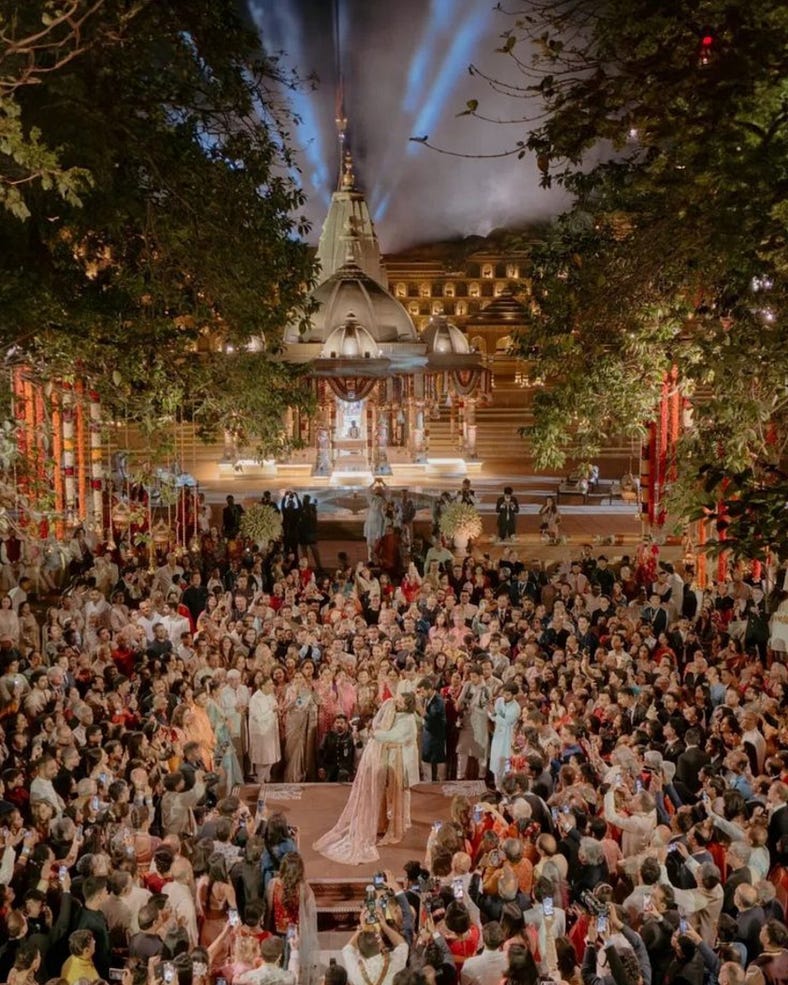
Indian weddings require an absurd number of venues. The mehendi at Aunt Priya’s house, sangeet at the community center, actual wedding at the temple, and reception at a hotel that’s exactly 47 minutes away in traffic that definitely won’t exist on the actual day (spoiler alert: it will).
Each venue transformation is a magic trick performed by decoration teams who could probably rebuild the Taj Mahal in six hours if properly motivated. They arrive at dawn with enough flowers to stock a botanical garden and enough fabric to outfit a small army.
The Timing Time Warp
Indian weddings operate in a parallel dimension where time moves differently. The invitation says 7 PM, which translates to “arrive by 8 PM if you want to help with last-minute setup, or 9 PM if you actually want to see the ceremony start at 10 PM.”
The muhurat, the auspicious timing, adds cosmic pressure to the temporal chaos. The ceremony must begin at exactly 10:47 PM, regardless of whether the groom’s horse is frightening or the bride’s cousin is still getting her eyebrows threaded.
The Food Wars
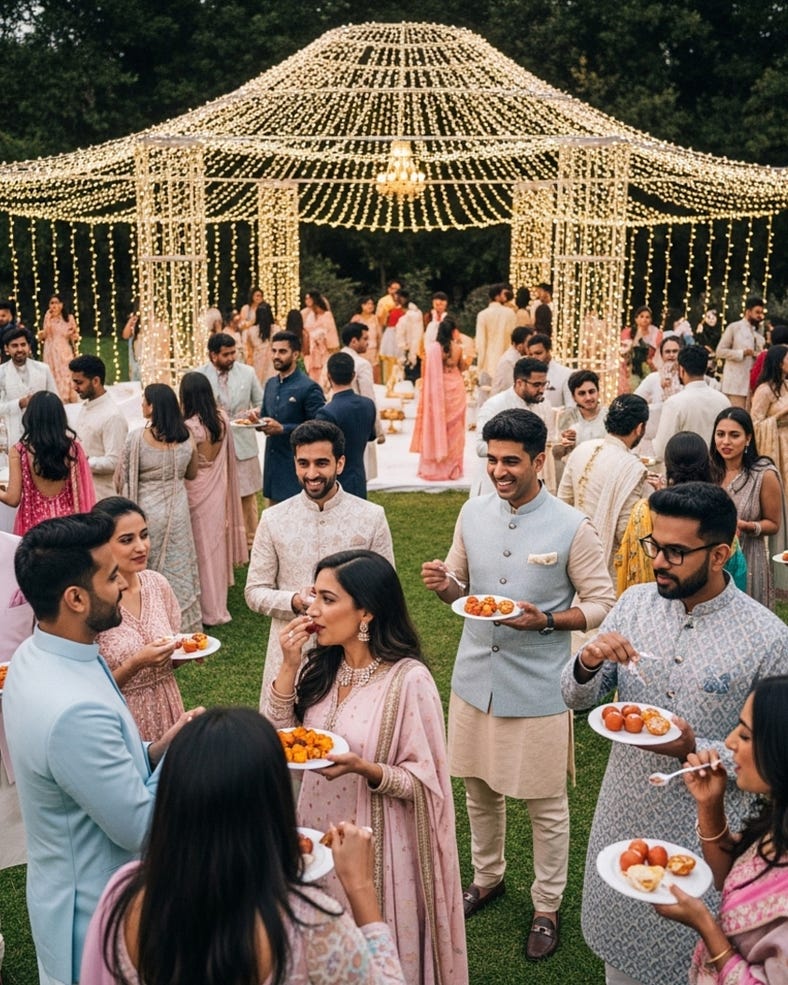
Indian wedding catering is an exercise in abundance management that would challenge NASA’s mission control. The food counters become strategic battlegrounds where aunties survey the options with military precision, calculating optimal queue positioning while balancing plates that could feed small villages.
The live cooking stations create bottlenecks. The chaat counter becomes a social hub where distant relatives reconnect over their shared love of spicy snacks and their mutual confusion about whose wedding this actually is.
The Photography Circus
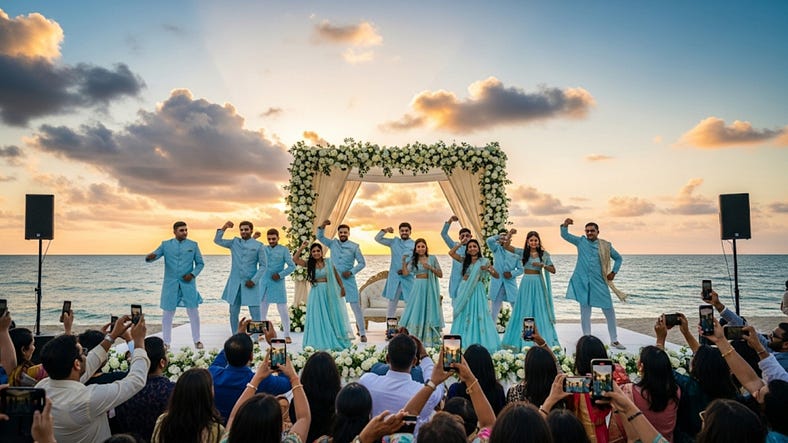
Wedding photographers navigate through the chaos like war correspondents covering a particularly festive battle. They dodge enthusiastic relatives who’ve appointed themselves as assistant directors, capture candid moments while avoiding flying garlands, and somehow maintain their sanity while Uncle Mohan insists on reenacting his favorite Bollywood dance sequence.
The formal family photos require the organizational skills of a peacekeeping mission. Getting 47 family members to look at the same camera simultaneously while maintaining their elaborate outfits is like herding cats, as if cats wore heavy jewelry and had strong opinions about photo composition.
The WhatsApp War Room
Modern Indian weddings generate more WhatsApp groups than a small corporation. “Sharma Wedding Planning,” “Decoration Committee,” “Transportation Coordination,” “Emergency Contact,” and seventeen others with names like “Cousins Only NO PARENTS” create a communication network that would impress intelligence agencies.
The messages flow like a digital river: “Does anyone know if the flowers arrived?” “The priest wants to know if we have coconuts.” “URGENT: Need someone to pick up Nani from the train station.”
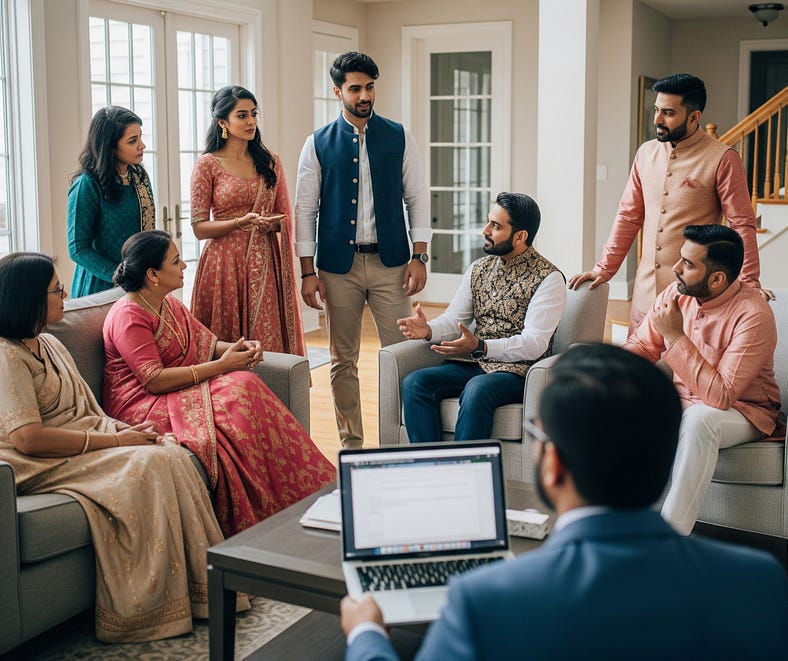
The Vendor Coordination Carnival
Indian weddings involve more vendors than a small music festival. Florists, decorators, caterers, photographers, musicians, priests, makeup artists, and transportation coordinators all operate simultaneously in the same space, creating a beautiful ballet of organized chaos.
The vendor relationship management requires diplomatic skills. Last-minute changes aren’t requests, they’re disasters that everyone must adapt to with the flexibility of professional gymnasts. Despite living in the digital age, coordination still happens through a charming mix of spreadsheets, sticky notes, and that one cousin who somehow keeps track of everything in their head.
Despite the chaos or perhaps because of it, Indian weddings create magical experiences that linger in memory long after the last guest has departed and the final WhatsApp message has been sent. The confusion becomes charm, the mishaps become legends, and the organized mayhem becomes the perfect backdrop for celebration.
The morning after, families gather to debrief, sharing stories that will be retold at future weddings. The chaos that seemed overwhelming transforms into the foundation for years of family storytelling. The vendor who got lost becomes a character in family folklore, and the dancing uncle becomes an annual tradition.
